


Framing can change the way artwork feels, but not every piece needs it.
Some works are meant to be framed from the beginning. Others are designed to stand on their own. Knowing the difference can make the decision feel much simpler and help you present the piece in a way that feels intentional in the room.
It often depends on the medium
The first question is usually not whether a piece should be framed, but what kind of artwork it is.
Works on paper, including drawings, prints, photographs, and many mixed media pieces, are often framed for both protection and presentation. Framing helps support the work physically while also giving it a more finished presence on the wall.
Paintings on stretched canvas, on the other hand, are often displayed without traditional framing. In many cases, the edges are finished and the piece is ready to hang as it is.
Works on paper usually benefit from framing
Paper is naturally more delicate than canvas or panel, so framing often serves a practical purpose as much as a visual one.
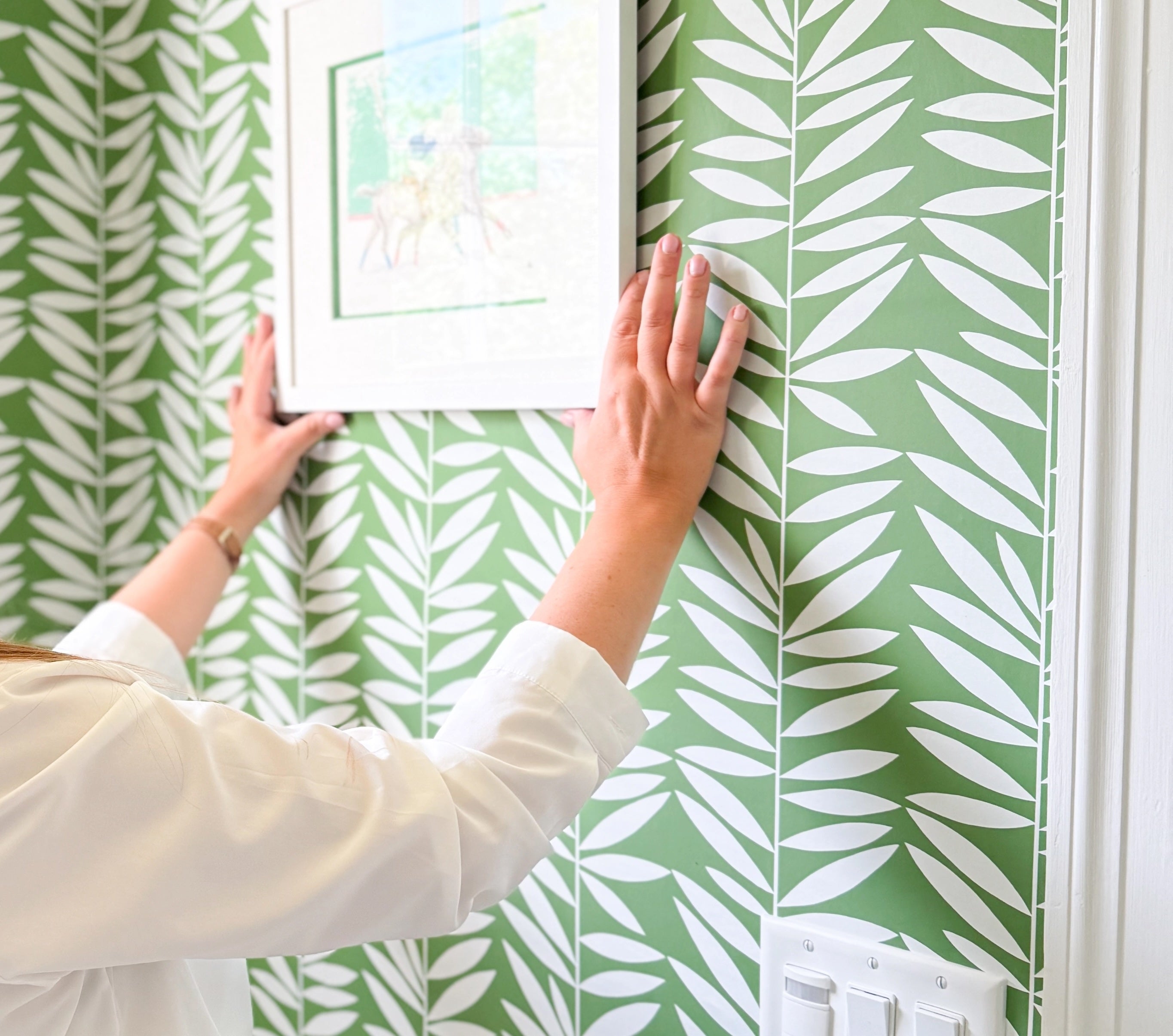
A frame can help protect the piece from handling, dust, and environmental wear, especially when paired with proper backing and glazing. It also gives the work more visual structure, which can make smaller or quieter pieces feel more substantial once installed.
For many prints and drawings, framing is not just an aesthetic choice. It is part of how the work is properly presented.
Canvas does not always need it
A stretched canvas can often hang beautifully without a traditional frame.
When the edges are finished and the proportions feel right, an unframed canvas can look clean, modern, and confident on the wall. This is especially true for contemporary work where the simplicity of the presentation suits the painting itself.
That said, some collectors still prefer to add a floater frame or another minimal framing treatment to give the piece a more architectural finish. In that case, framing is less about necessity and more about preference.
Framing can change the tone of a piece
Framing is not only practical. It also affects the character of the artwork.
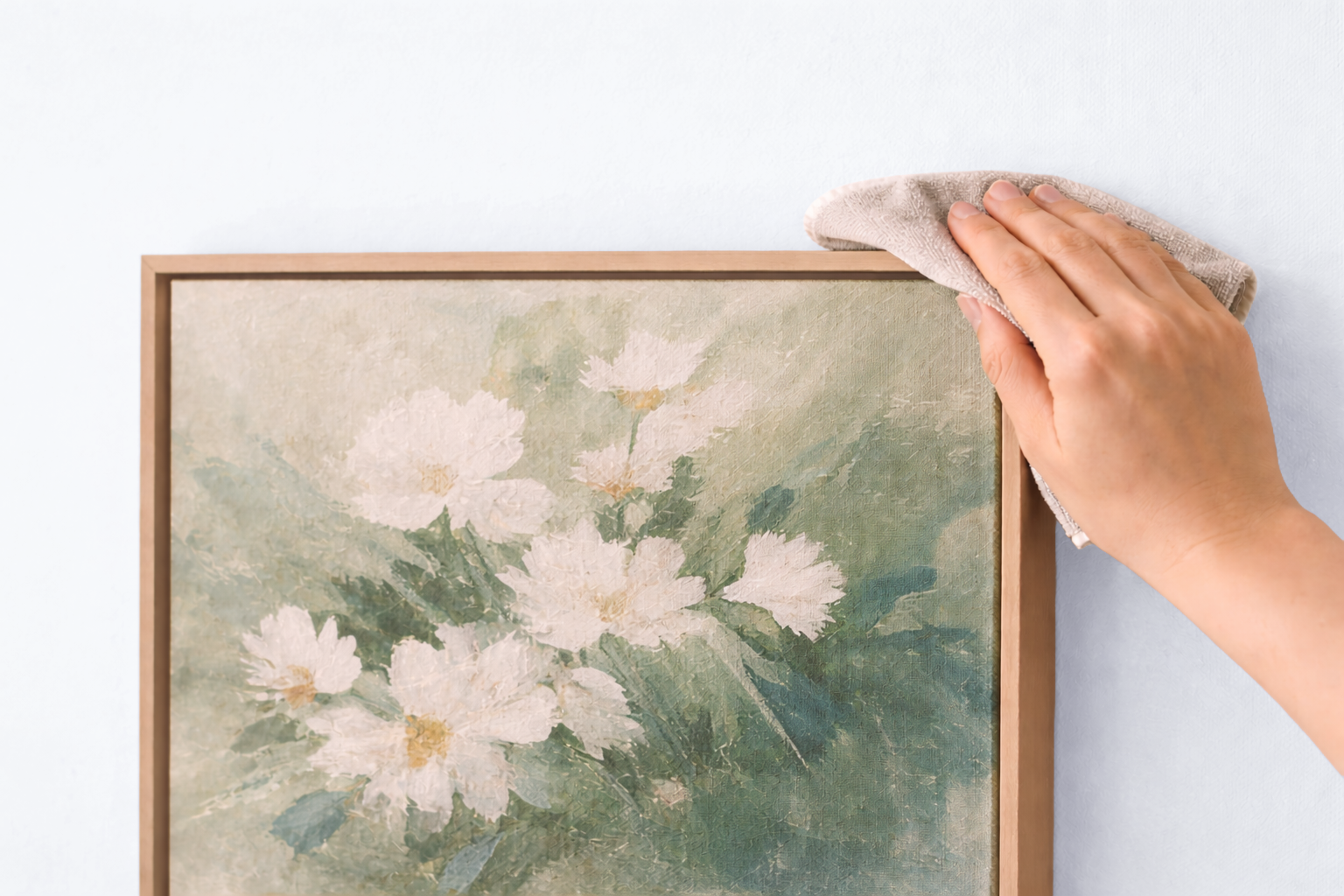
A simple natural wood frame may make a piece feel warmer and more relaxed. A thin metallic frame can feel cleaner or more refined. A mat can create breathing room and help smaller works feel more important. A frameless presentation may feel more immediate and contemporary.
The right choice depends on both the artwork and the room. Sometimes the frame should quietly support the piece. Other times, it should help elevate it.
The room matters too
Presentation should make sense in context.
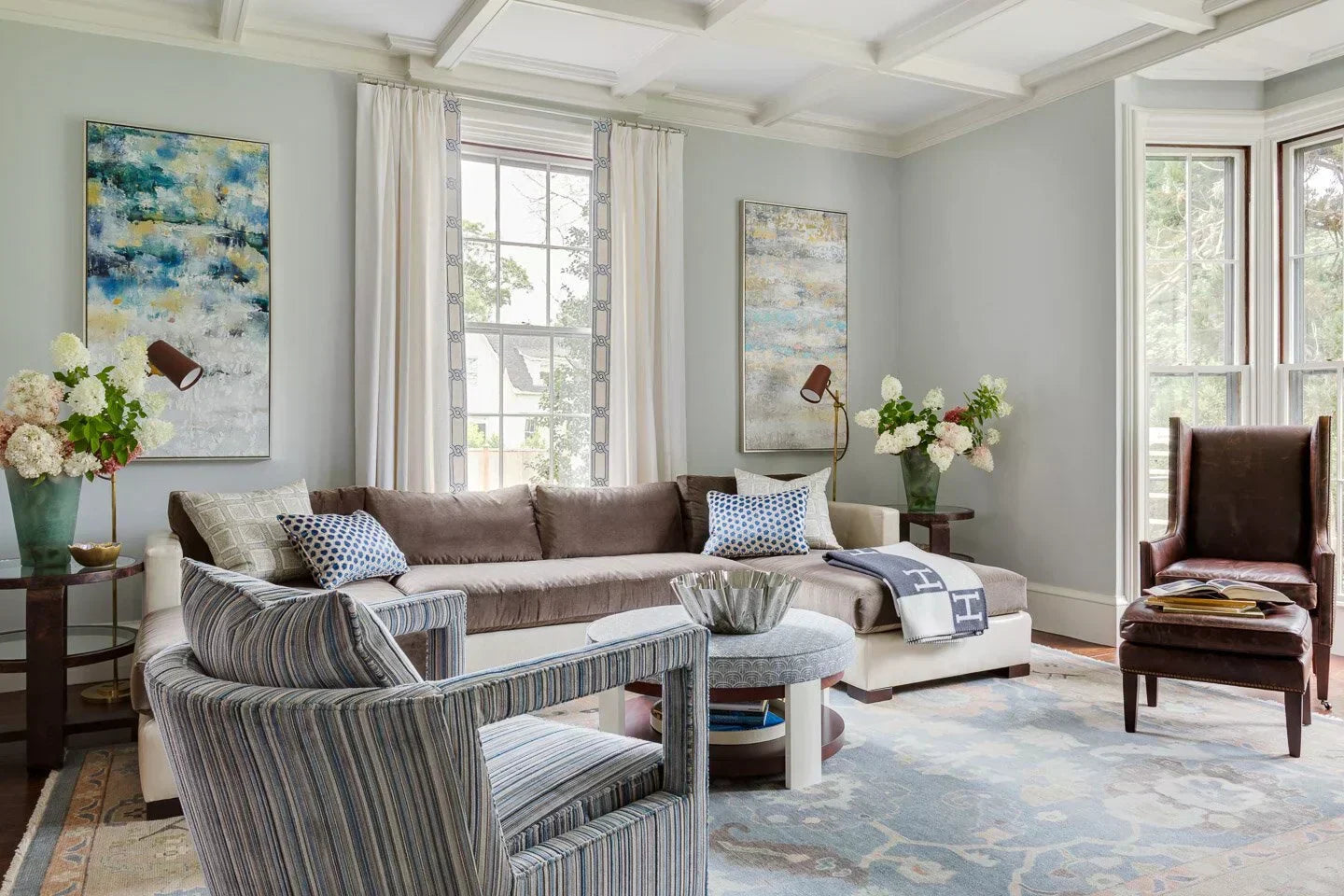
A more traditional interior may call for a different framing approach than a room that is minimal and modern. Similarly, a bold painting may need very little around it, while a smaller drawing may benefit from the structure and space that framing provides.
The goal is not simply to frame for the sake of framing. It is to present the work in a way that feels balanced with the architecture, furniture, and mood of the room.
When in doubt, think about intention
The clearest way to decide is to ask what the piece needs.
- Does it need protection?
- Does it need more presence?
- Is the current presentation already complete?
- Would a frame improve the relationship between the artwork and the room?
Those questions usually lead to a better answer than any fixed rule.
Some pieces feel strongest exactly as they are. Others come to life once they are framed properly. In both cases, the best presentation is the one that feels considered, not automatic.
Framing should never feel like an afterthought. It is part of how the artwork is experienced, and in many rooms, it can make the difference between a piece that simply hangs and one that feels fully resolved.