
Living with art is one of the pleasures of collecting, but once a piece is in the home, a little care goes a long way.
Most artwork does not require constant attention, but it does benefit from the right environment and a few thoughtful habits. Light, moisture, heat, and placement can all affect how a piece looks and lasts over time. The goal is not to be overly cautious. It is simply to make sure the work is being lived with well.
Start with the right location
Where artwork hangs matters more than many people realize.
Direct sunlight, strong heat sources, high humidity, and frequent temperature shifts can all affect a piece over time. Even beautiful rooms may not always be ideal if the environment is too harsh or inconsistent.
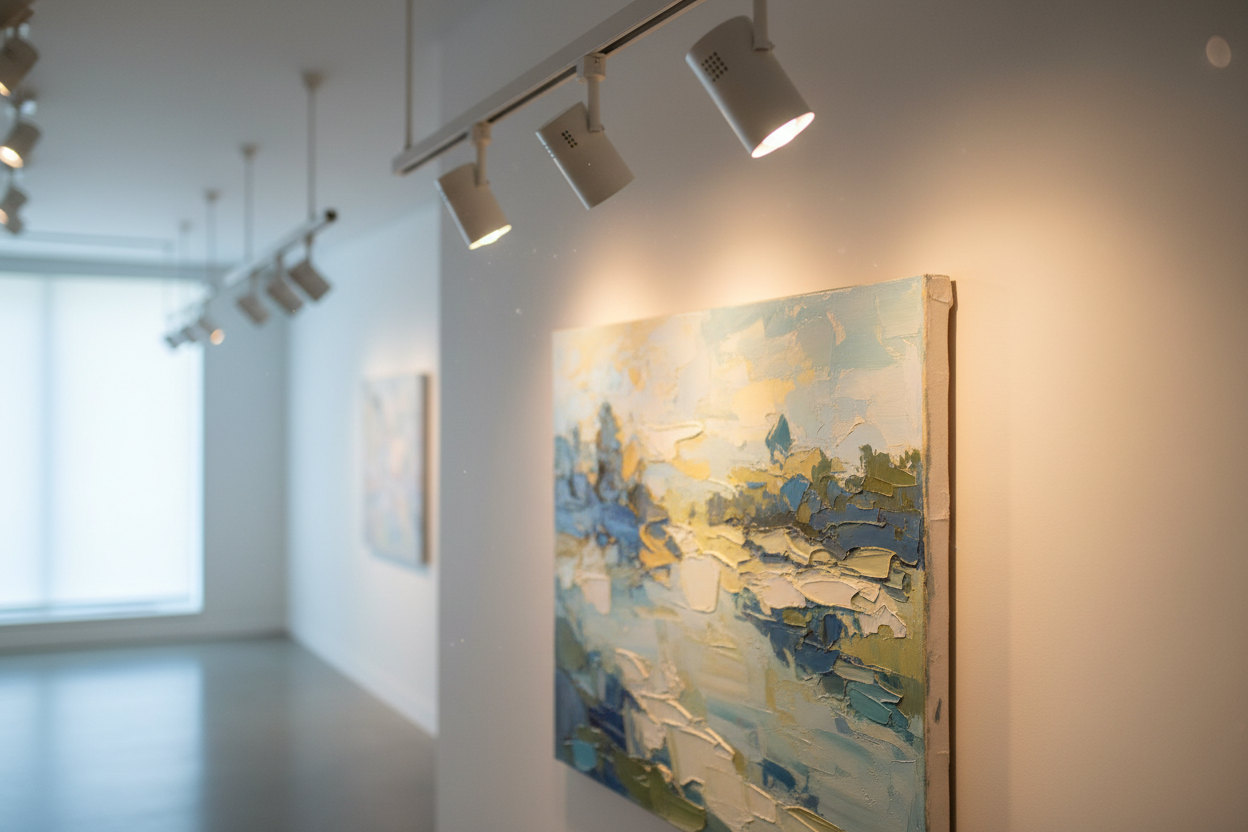
In general, artwork tends to do best in spaces with stable temperature, moderate humidity, and indirect light. That does not mean every room needs to be perfect, but it does mean placement should be chosen with some care.
Be mindful of direct sunlight
Sunlight is one of the most common long-term risks for artwork.
Over time, strong direct sun can fade pigments, affect paper, and change the overall appearance of a piece. This is especially important for works on paper, prints, photographs, and more delicate materials, though original paintings can also be affected.
If a room gets heavy afternoon light or strong sun for long stretches of the day, it is worth considering a different wall, using window treatments, or choosing a piece that is better suited to the conditions.
Humidity matters more than people think
Moisture in the air can be just as important as light.
Rooms with persistent humidity, such as some bathrooms, kitchens, or poorly ventilated spaces, may not be the best fit for certain works. Excess moisture can affect paper, framing materials, canvas tension, and the overall condition of a piece over time.
That does not mean art can never live in those spaces, but the medium, framing, and environment all need to be considered more carefully.
Cleaning should be gentle
When it comes to cleaning artwork, less is usually better.
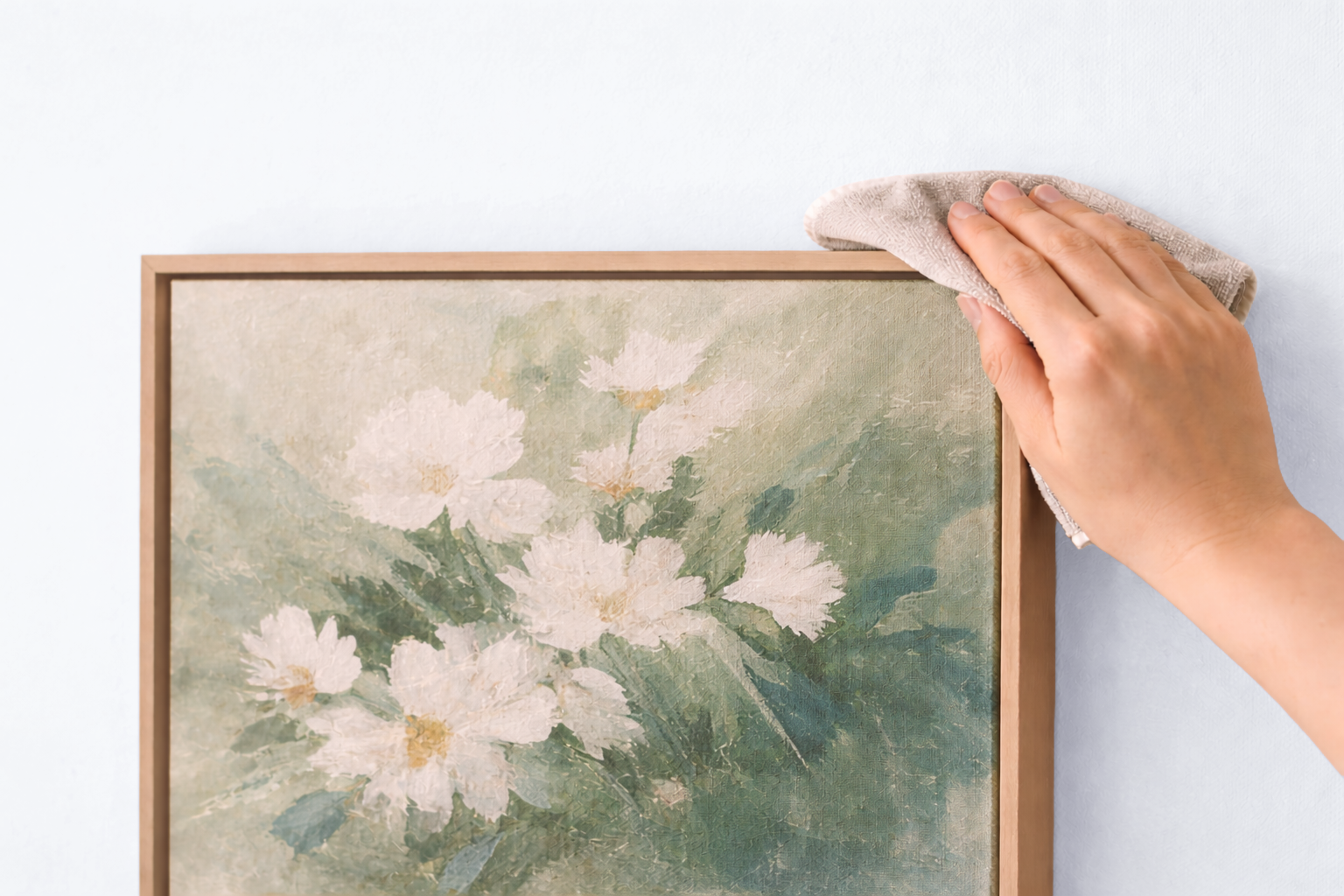
Frames can often be dusted gently with a soft, dry cloth. Glass should be cleaned carefully and never sprayed directly near the artwork itself. For the artwork surface, especially original paintings or delicate works on paper, it is best to avoid aggressive cleaning, moisture, or household products.
If something seems to need more than light dusting, it is usually better to ask before trying to fix it yourself.
Presentation helps protect the piece
Good presentation is not only about how artwork looks. It also helps with protection.
Proper framing, secure hanging, backing, glazing where appropriate, and thoughtful placement all contribute to how well a piece holds up over time. This is especially true for works on paper, which benefit from being framed and handled correctly from the start.
Even a small adjustment in how a piece is framed or where it is placed can make a meaningful difference in how well it ages.
Small habits make a difference
A few simple habits are often enough.
Avoid hanging artwork too close to radiators, vents, or fireplaces. Be mindful when moving or storing pieces. Use care when dusting nearby surfaces. And if a work is being installed in a more complicated space, it is worth making sure the hanging method is secure and appropriate for the piece.
Caring for artwork does not need to feel precious. It simply means giving the piece the conditions it needs to remain stable and beautiful over time.
A well-chosen work should be something you can live with and enjoy every day. Thoughtful care just helps ensure it stays that way.